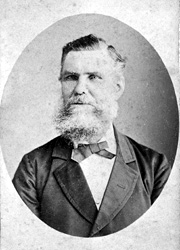
On the Mahurangi River near Duck Creek, a settler’s home became more than a farm. Craigieburn helped carry news and letters through a growing district, linking river settlements with Sandspit and Warkworth. Its story is also the story of Michael William Munro and his long service to the local community.
From soldier to settler
Michael William Munro served in the 58th Regiment, which travelled to Australia escorting convicts before being sent to New Zealand in 1845 during the conflict in the Bay of Islands. He later made his home in the Mahurangi district, buying land near Duck Creek at the first Mahurangi land sales in 1853. His property became known as Craigieburn.
A home that connected a district
Before an organised postal network reached the district, Munro offered his home as a collection point for letters. Early mail travelled overland to Orewa, was rowed to Te Kapa and then carried up the Mahurangi River. The cutter Frances later brought mail on a weekly run, although weather and tides could delay its arrival. From Craigieburn, letters could continue by packhorse to Lower Matakana — now Sandspit.
Craigieburn Post Office
The original Algies Bay history records Munro’s appointment as postmaster of Middle Mahurangi in 1864; the post office later took the name Craigieburn. By 1870, Mahurangi Heads, Craigieburn and Warkworth all had gazetted post offices. Steamers such as the Lady Bowen helped make the river service more dependable, though mail still arrived only once a week. In a district where roads were few, Craigieburn was a valuable link between scattered households.
More than a postmaster
Munro’s contribution extended well beyond the mail. He collected rates, served on the Eastern Mahurangi Highway Board and acted as secretary to local committees. He was also a special constable for more than eleven years. The original local account records his involvement with the Mullet Point School committee, Rodney County Council and the building of Warkworth’s Masonic hall in 1879. His many roles reflect how much the developing district relied on active members of its community.
The farm after Munro
The Craigieburn post office closed when Munro died in 1884, but the farm kept its name. His family continued living there until 1905, when the property was advertised for lease with twelve acres of orchard, eighty acres of grass and forty-two acres of bush. In 1921, an owner named Mr Coleman found a copy of the first edition of the New Zealand Herald, dated 1863, beneath the floorboards while renovating the house.
Traces of the old house
When the Robinson family took possession in 1924, the original house was still standing. A ‘V R’ sign remained on a wall — a reminder that it had served as a post office during Queen Victoria’s reign. Judy Waters’ local history also records a poignant family detail: Dorothy, one of the Robinsons’ twins, died only hours after birth and was buried beneath a pear tree near the house.
A written legacy
Craigieburn is no longer a widely recognised place name, but Munro left another lasting record. His reports to the New Zealand Herald between 1863 and 1884 captured the development of the district he called home. Preserved newspapers on Papers Past offer a way to explore the concerns, changes and everyday life of the early Mahurangi community.
Sources & further reading
This account draws on the original Algies Bay Craigieburn history and Judy Waters’ “History — Life before Google”, published by Local Matters in September 2012. The portrait is identified in Ronald H. Locker’s Jade River: A History of the Mahurangi, published online by Mahurangi Magazine.